
Best Fabric Conditioner for Sensitive Skin: A 2026 Guide

Columbia Pike Laundry offers pickup & delivery across Northern Virginia.
You pull a clean shirt over your head, expect that soft just-washed feeling, and then the itching starts. Maybe it’s your collar. Maybe it’s the waistband. Maybe your child starts scratching the minute pajamas go on. Clean laundry is supposed to feel safe. For a lot of households, it doesn’t.
That mismatch is what sends people hunting for the best fabric conditioner for sensitive skin. They want softness without perfume. Less static without a rash. Something that helps clothes feel better, not worse. And usually they don’t just need a product recommendation. They need a system that stops the cycle of washing, wearing, itching, rewashing, and guessing.
Sensitive skin isn’t a niche issue either. It affects a huge share of people, and families feel it first in the everyday basics: sheets, towels, school uniforms, baby clothes, workout wear, and that favorite sweatshirt someone refuses to stop wearing. If laundry products are part of the problem, changing one bottle can help. But the bigger win comes from fixing the whole routine.
That Fresh Laundry Itch You Just Can't Scratch
The frustrating part is how innocent it looks. Clothes smell “fresh.” Towels feel fluffy. Everything seems clean. Then your skin says otherwise.
A lot of people assume the detergent caused the reaction, and sometimes it does. But fabric conditioner often gets overlooked because it’s sold as the comfort step. In reality, it’s one of the most common places irritation sneaks in. The softener that promises softness may leave behind the very residue that keeps skin on edge.
For busy families, that can turn into a low-level constant problem. One child has eczema patches that won’t calm down. A parent notices itching after changing into clean clothes at night. A baby seems fussy in freshly washed onesies. You start wondering whether it’s the fabric, the weather, the soap, or all of it at once.
Practical rule: If skin gets worse after putting on clean clothes, treat laundry products as suspects before blaming the fabric itself.
The good news is that this usually becomes clearer once you stop looking for a magic bottle and start looking at the full laundry ecosystem. Fabric conditioner matters. So does the detergent under it. So does dosage, rinse quality, machine buildup, and whether you’re using conditioner on fabrics that don’t handle coating well.
A skin-friendly laundry setup should do three things:
- Reduce friction: Softer fibers rub less against irritated skin.
- Limit residue: Less leftover coating means less contact with potential irritants.
- Stay predictable: The fewer variables in your laundry process, the easier it is to identify what works.
That’s the path back to comfortable clothes. Not heavily scented “freshness.” Just laundry that disappears into the background and lets skin calm down.
Why "Clean" Laundry Can Irritate Your Skin
Fabric conditioner works by leaving a light coating on fibers. That’s how clothes feel smoother and less staticky. For sensitive skin, that coating can be either helpful or irritating depending on what’s in it and how much remains on the fabric.

The residue problem
Think of fabric conditioner as a thin film laid over cloth. If that film contains synthetic fragrance, dyes, harsh surfactants, or irritating preservatives, your skin can end up in direct contact with them for hours. That matters most in high-friction spots like necklines, underarms, waistbands, socks, fitted sheets, and sleepwear.
Sensitive skin conditions affect approximately 45% of the global population, and 72% of eczema patients experience significant symptom relief after switching to hypoallergenic laundry products, according to this sensitive-skin fabric softener review. That’s a strong clue that the problem often isn’t “laundry” in general. It’s the ingredients left behind after laundry.
If you’re dealing with babies or toddlers, the threshold for irritation can feel even lower. Parents trying to simplify routines may also find these essential baby skin tips helpful because baby skin often reacts to the same laundry issues adults miss.
Why irritation feels delayed
Laundry reactions don’t always show up as a dramatic rash. Often they look like:
- Persistent itchiness: Especially after changing clothes or getting into bed
- Dry, prickly patches: Common where seams or elastic touch skin
- Redness that comes and goes: Hard to trace because the trigger stays in rotation
- Flare-ups in already sensitive areas: Behind knees, inside elbows, neck, or chest
That delayed pattern is why people keep buying products labeled “soft” or “gentle” that still don’t work for them. The label may speak to softness. Your skin cares about residue.
Softness and skin comfort aren’t the same thing. A product can make fabric feel smoother while still leaving behind ingredients your skin doesn’t tolerate.
The smartest shift is to stop asking, “Does this make clothes smell nice and feel soft?” and start asking, “What is this leaving on the fabric I’ll wear all day?”
Decoding Labels The Ingredients to Avoid
Consumers don’t need a chemistry degree. They need a fast way to scan a bottle and put it back on the shelf if it’s likely to cause problems.
The red flags worth spotting fast
Start with the obvious problem ingredients.
- Fragrance or parfum: This is the first thing many sensitive-skin households cut, and for good reason. Fragrance blends can contain multiple components, and the label usually doesn’t tell you which one might be bothering you.
- Dyes or colorants: If a conditioner is bright blue, purple, or pink, that color serves the bottle more than your skin.
- Preservatives that feel harsh on reactive skin: If you’ve had trouble with personal care products before, preservatives can be worth extra attention in laundry too.
- Optical brighteners: These are more common in detergents, but they belong on the watch list across your laundry routine because they can add another layer of residue.
Then there’s the ingredient family many shoppers don’t recognize.
Quats and coating agents
Some conditioners rely on quaternary ammonium compounds, often shortened to quats, to create that slick, soft feel. They’re effective softening agents, but they also work by coating fibers. For highly reactive skin, “effective” and “comfortable” are not always the same thing.
That doesn’t mean every product with this chemistry will cause a reaction. It means if your skin is still flaring, this is one of the first places to investigate.
When people want a better grasp of the full product stack, not just the softener bottle, it helps to understand the broader science behind laundry detergents, because detergent residue and softener residue often interact.
A quick store test
Use this simple checklist before you buy:
- Flip to the ingredients panel first. Don’t start with the marketing claims.
- Reject scented formulas early. “Light scent” still means scent.
- Skip heavily colored liquids. Sensitive skin usually does better without decorative extras.
- Watch for vague comfort language. “Soft breeze,” “fresh linen,” and “calming cotton” tell you nothing useful about irritation risk.
- Prefer shorter, plainer formulas. Fewer variables make troubleshooting easier.
If you can’t tell what a product is trying to leave on your fabric, don’t let it sit against your skin all day.
The best shoppers in this category aren’t looking for a miracle. They’re removing obvious troublemakers, one label at a time.
How to Choose the Best Fabric Conditioner
Once you know what to avoid, choosing gets easier. The best fabric conditioner for sensitive skin should do one main job well: reduce friction without turning your clothes into a delivery system for irritants.
A key reason softener can help at all is simple. A 1994 clinical study found that softened fabrics had a significantly lower frictional effect on skin than unsoftened fabrics, which matters because less mechanical stress helps irritated skin recover and reduces chafing, as shown in the PubMed study record.
Green flags that matter
Look for signs that a product was built for skin comfort, not just scent performance.
- Fragrance-free: Not “clean scent.” Not “lightly scented.” Fragrance-free.
- Dye-free: If the liquid looks plain, that’s often a good sign.
- Hypoallergenic positioning: Not a guarantee, but useful when paired with a simple formula.
- Plant-based softening ingredients: These can be a good fit for some households, especially when the rest of the routine is low-residue.
- Compatibility with your detergent: A great conditioner can still fail if it doesn’t play well with the soap you already use.
If you’re washing baby items or building a gentler routine from scratch, this Little Venture Co. laundry guide is a practical companion read because it keeps the focus on skin tolerance rather than perfume or fluffiness.
Top-Rated Fabric Conditioners for Sensitive Skin
| Product Name | Key Feature | Fragrance-Free | Plant-Based | Best For |
|---|---|---|---|---|
| Downy Ultra Free & Sensitive | Widely recognized unscented option | Yes | No | Households that want a familiar mainstream pick |
| Botanical Origin | Plant-based positioning | Some options | Yes | Shoppers trying to reduce synthetic ingredients |
| all free clear liquid fabric softener | Perfume-free and dye-free positioning | Yes | No | Families keeping their laundry routine simple |
| Seventh Generation fabric softener | Plant-based formula style | Some options | Yes | People who prefer a more eco-leaning product line |
Trade-offs to keep in mind
No product is perfect for everyone.
Some fragrance-free mainstream options soften well but may still feel too coated for very reactive skin. Some plant-based options feel gentler but don’t always deliver the same softness people expect. That’s why the best answer is often the best match, not the most popular bottle.
One practical option for families who’d rather not troubleshoot every load at home is Columbia Pike Laundry, which uses Free & Clear detergent by default and allows fragrance-free softener requests through customer preferences.
A good sensitive-skin conditioner should make clothes easier to wear. It shouldn’t become another thing you have to recover from.
Smart Routines and Natural Alternatives
Even a good product can become a bad routine. Sensitive skin usually improves when you reduce variables, use less product than you think you need, and keep your machine from turning into a residue reservoir.
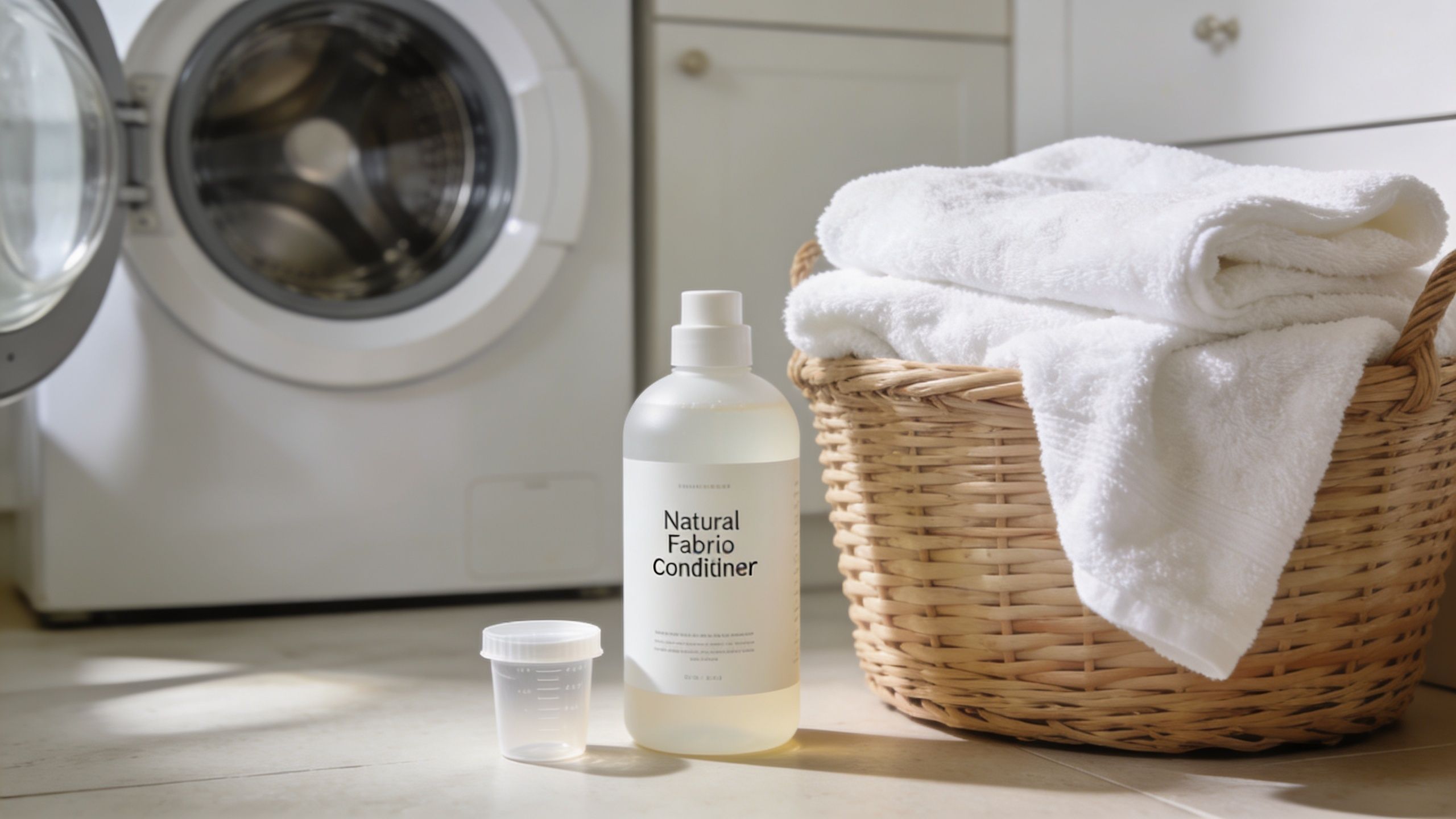
Better habits beat stronger formulas
One overlooked issue is buildup. As noted in all free clear liquid fabric softener product information, residue can accumulate over time, and some plant-based surfactant systems may underperform in cold water washes. In plain terms, using “gentle” softener doesn’t help much if too much of it stays on the fabric or inside the washer.
That’s why routine matters as much as product choice.
- Use less than the cap suggests: Start with a small amount, especially on clothes worn close to the skin.
- Run an extra rinse for high-risk loads: Underwear, pajamas, baby clothes, and sheets often benefit most.
- Patch-test one load first: Don’t wash the whole family’s laundry in a new product on day one.
- Clean the dispenser and drum regularly: Old buildup can keep redepositing onto fresh laundry.
- Be careful with cold water expectations: Some formulas behave differently there.
A fragrance-free label doesn’t cancel out overuse. Too much product is still too much residue.
Natural alternatives that are worth trying
For some households, the right move is using less commercial conditioner. For others, it’s skipping it entirely.
A few options come up repeatedly for good reason:
- Distilled white vinegar in the rinse cycle: It can help reduce stiffness and leftover detergent feel. It won’t make clothes smell like a scented conditioner, which is often the point.
- Wool dryer balls: These soften through movement rather than coating. They’re especially useful for people who want fewer ingredients touching fabric.
- No softener on certain loads: Towels, performance fabrics, and some children’s sleepwear often do better with a simplified approach.
If you want a practical read focused on wool dryer balls and minimalist laundry habits, Lumehra's sensitive skin laundry guide is a useful reference point. For a broader approach to reducing irritants in the rinse stage, this guide on choosing safer fabric softeners can help you sort through lower-residue options.
When natural options don’t work well
There’s one honest downside. Natural alternatives don’t always give the same feel as conventional conditioner. Vinegar won’t create that slick softness. Dryer balls help, but they won’t solve every static problem. Some plant-based conditioners also need more trial and error, especially in energy-saving wash routines.
That trade-off is often worth it for skin comfort. But it’s still a trade-off.
Your Questions Answered A Guide for Families
Families usually ask the same few questions, and they’re good ones.
Is fabric conditioner safe for baby clothes
Sometimes yes, sometimes no. If you use it, keep it fragrance-free and minimal, and test it on a small batch first. For highly reactive babies, many parents do better with no conditioner at all on everyday basics until skin is stable.
Do I even need fabric conditioner if I have sensitive skin
Not always. If your clothes feel fine without it, you may not need it. Conditioner is most useful when fabric roughness itself is part of the problem, such as scratchy sheets, stiff cotton, or clothes that chafe already irritated skin.
Why do my clothes still bother me after I switched products
Usually one of four things is happening:
- Old residue is still in the washer
- You changed the softener but not the detergent
- You’re using too much of a gentler product
- Certain fabrics are the trigger
That last one gets missed often. Some knits, synthetics, and textured fabrics can bother skin even when the formula is fine.
Can a laundry service actually help with sensitive skin
It can, if the service keeps product pairings consistent and allows special instructions. According to this discussion of detergent and softener compatibility, up to 35% of sensitive-skin users in consumer allergy forums report “rebound irritation” from mismatched detergent and softener pairs. That’s one reason professional handling can help when a household is tired of trial and error.
The practical benefit isn’t just convenience. It’s consistency.
A service that lets you specify fragrance-free preferences, avoids random substitutions, and sticks to tested combinations removes a lot of the hidden variables that make skin reactions harder to pin down. If you’d rather stop hauling bags, measuring products, and troubleshooting every load yourself, pickup and delivery can make a sensitive-skin routine much easier to maintain.
For busy families, the biggest relief is often not a new bottle. It’s finally having a laundry process that stays the same from one week to the next.
The best routine is the one that gives your skin fewer surprises.
If sensitive skin has turned laundry into guesswork, Columbia Pike Laundry offers a simpler option. You can set clear preferences, request fragrance-free handling, and stop spending your evenings testing products load by load. Laundry isn’t your job anymore.
Free pickup, expert care, delivered back to your door.
Popular Blog Articles




Meet the Author
Daniel Logan didn’t start CPL because he loved laundry. He started it because his family was drowning in time debt, and laundry was one of the biggest weights.
Mornings were chaos with two kids under 5. Evenings felt like catch-up. And weekends? Gone to sorting socks and folding piles.
He knew his story wasn’t unique. So he built a business that gave families like his just a little bit of breathing room one load at a time.
With no laundry experience but deep tech skills, Daniel rolled up his sleeves, doing every job himself while building systems that turned it into a modern laundry service that saves customers time, simplifies their lives, and delivers reliability they can count on.
That’s where CPL began. Not from a playbook, but from pain. From one dad trying to buy back time: for himself, and for every household like his.
Free pickup, expert care, delivered back to your door.