
How to Sort Clothes by Color: A Step-by-Step Guide
Columbia Pike Laundry offers pickup & delivery across Northern Virginia.
TL;DR:
- Sorting laundry by color and fabric helps prevent dye transfer and prolongs clothing lifespan. Organizing your closet by color family speeds up laundry prep and reduces decision fatigue. Focusing on key sorting habits, like separating new darks and reading care labels, significantly minimizes laundry mistakes.
Most people learn how to sort clothes by color the hard way. A pink sock turns a load of whites blush, or a favorite gray shirt comes out of the wash looking faded and dingy. The good news is that these laundry disasters are almost entirely preventable. Sorting laundry by color and fabric type prolongs the life of your clothes and keeps colors looking newer longer. This guide walks you through every step, from reading care labels before you start to organizing your closet so the next laundry day takes half the time.
Key takeaways
| Point | Details |
|---|---|
| Read labels first | Pull out dry-clean-only and hand-wash items before sorting anything else to avoid damage. |
| Three piles minimum | Separate whites, pastels and light grays, and darks to prevent dye transfer and dulling. |
| Sort by fabric after color | Heavy fabrics like jeans and towels should be washed separately from lightweight and delicate items. |
| New darks go alone | New dark jeans and deeply dyed garments bleed heavily on the first wash, so always wash them solo. |
| Closet order speeds sorting | Organizing your wardrobe by color family makes grabbing and pre-sorting laundry significantly faster. |
What to do before sorting laundry by color
Before you touch a single sorting pile, a few minutes of preparation will protect your clothes and save you from preventable mistakes. Think of this as your pre-flight checklist.
Check every care label. Care labels direct safe wash cycles and temperatures, and ignoring them is where most fabric damage starts. Pull out anything marked “dry clean only” and set it in a separate pile right away. Do the same for hand-wash-only items. These pieces should never make it into a regular machine load, no matter what color they are.
Here is what to do with the rest of your laundry before it goes into any pile:
- Turn clothes inside out. This protects the outer surface from friction and fading, especially for dark jeans, printed tees, and embroidered items.
- Close all zippers and fasten hooks. Open zippers act like tiny blades in the drum, snagging and pilling softer fabrics nearby.
- Empty every pocket. Tissues, receipts, and coins can damage fabrics and clog your machine’s filter.
- Place delicates in mesh laundry bags. Lingerie, lace, and thin knits need the extra protection. Learn more about when to use a delicate wash so you can make the right call every time.
- Check for heavy stains. Pre-treat stained items before they go into the pile so the stain does not set further during the wash cycle.
Pro Tip: Sort your dry-clean-only pieces first, then lights versus darks, then delicates. This layered sorting approach tackles the biggest risks first and cuts down on decision fatigue.
How to sort clothes by color effectively
This is where most people oversimplify things. The classic “lights and darks” rule is a starting point, not the whole story.
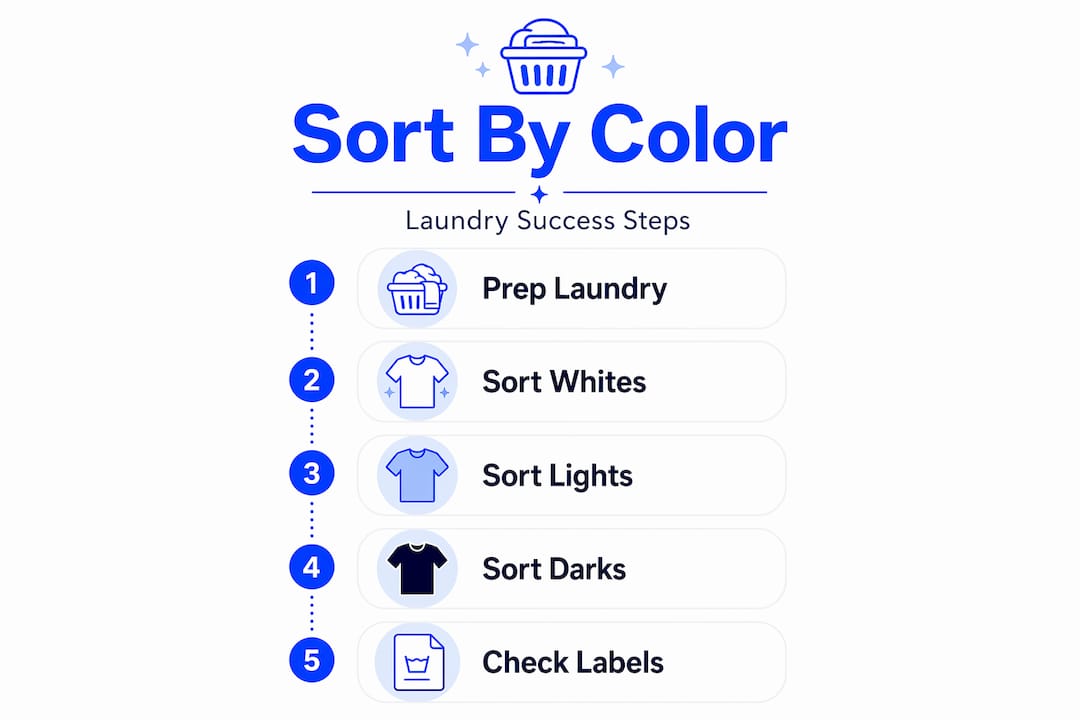
The three-pile method
The minimum you should work with is three piles. Sort clothes into whites and pastels and light grays, and darks like navy, black, browns, and reds to minimize dye transfer. But that second category deserves a closer look.
Many people lump all light-colored items together, which leads to a specific and frustrating problem. Treating all light colors as one pile is too broad. Pastels washed repeatedly with bright whites can slowly take on a grayish or dingy tone. Light pinks, pale yellows, and soft lavenders do better in their own mid-tone pile, away from both stark whites and dark garments.
Pro Tip: For patterned or multicolor garments, go by the dominant color. A navy shirt with white stripes belongs with your darks. A white dress with small floral prints belongs with your lights.
The table below compares a basic two-pile system with a more detailed approach so you can decide what level of sorting works for your household.
| Sorting Method | Piles | Best For | Risk Level |
|---|---|---|---|
| Basic (2 piles) | Lights and Darks | Small households with mostly stable, washed garments | Moderate — pastels may dull over time |
| Standard (3 piles) | Whites, Pastels/Light Grays, Darks | Most households; balances effort and protection | Low — covers the main dye transfer risks |
| Detailed (4+ piles) | Whites, Pastels, Brights, Darks | Large families or anyone with heavily dyed new garments | Very low — maximum color preservation |
Washing dark and light items together causes visible dye transfer. Even a cold wash cycle cannot fully stop loose dye from migrating off darker fabrics onto lighter ones in the same drum. Color coding your clothes before they even reach the machine is your best defense. For deeper guidance, the laundry sorting basics resource from Columbiapikelaundry covers the full picture.
Sorting within color groups by fabric type
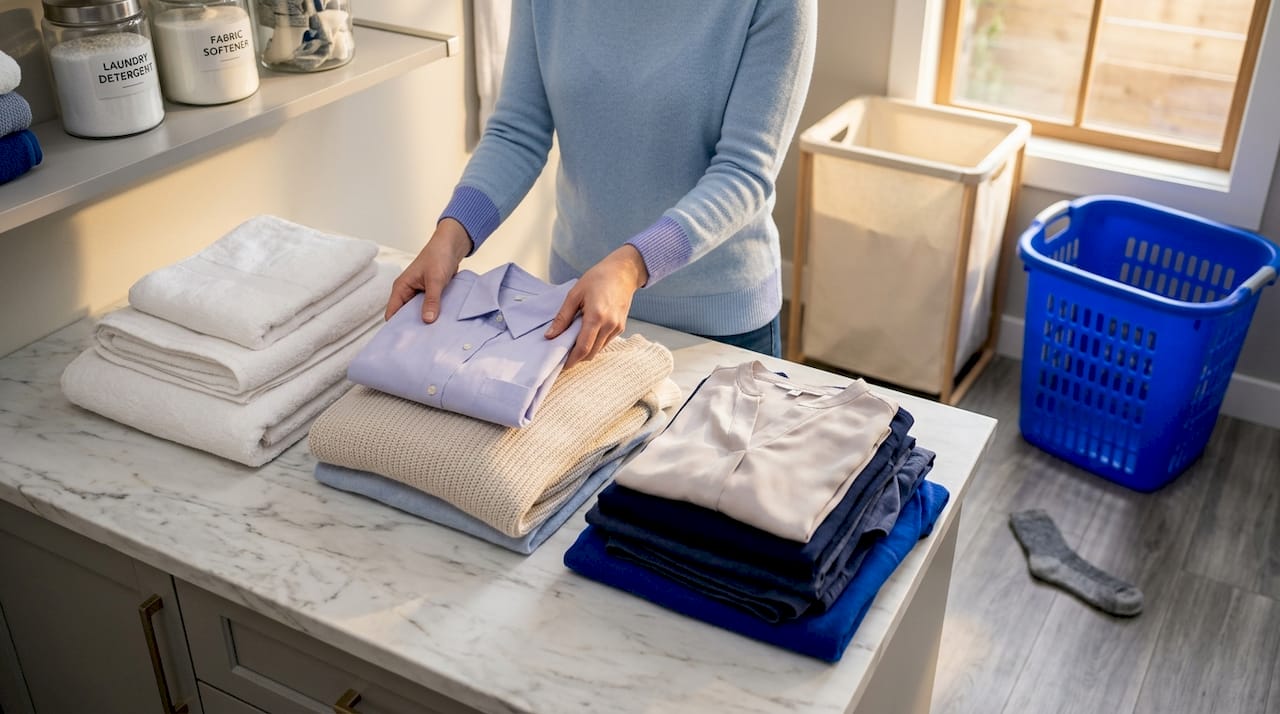
Once you have your color piles sorted, you are not done. Fabric type is the second layer of sorting that most people skip, and it matters more than they realize.
After color sorting, separate by fabric type and care needs to prevent damage and get the best wash results. Here is how that breaks down in practice:
- Heavy fabrics get their own load. Denim jeans, bath towels, canvas items, and heavy hoodies create a lot of friction in the drum. They can pill, snag, or stretch lighter fabrics that share the load with them.
- Lightweight fabrics wash together. T-shirts, dress shirts, and lightweight pants do well together at gentler cycles and lower spin speeds.
- Delicates need the most protection. Place lingerie, silk blouses, thin knits, and lace items in mesh bags before loading them. Use a delicate or gentle cycle and cold water.
- Lint donors and lint collectors should be separated. Chenille, fleece, and terry cloth shed lint heavily. Keep them away from dark synthetics and corduroy, which attract and hold lint like magnets.
- Towels and clothing should not share a load. Towels need hot water and long cycles to get truly clean. Most clothing does not. Mixing them typically means either your clothes are over-washed or your towels are under-washed.
This sorting in layers approach — color first, then fabric type and care — gives you the most protection without turning laundry day into a full-time job. It also helps you catch any remaining care label conflicts before water touches a single thread.
Common mistakes when sorting clothes by color
Even people who sort their laundry regularly make a few consistent errors. These are the ones worth knowing.
- Washing new dark jeans with anything else. New jeans bleed heavily on the first wash and can stain lighter items badly. Always wash brand-new dark denim alone the first two or three times.
- Assuming cold water makes sorting optional. Skipping sorting leads to gradual dulling and color loss over time, even with cold washes. Cold water slows dye transfer. It does not stop it.
- Ignoring care labels on “regular-looking” clothes. A basic-looking top can be made from acetate or rayon that will shrink or warp in a standard wash. The label tells you the truth.
- Grouping all lights as white. As mentioned, pastels need their own pile. Washing them with bright whites repeatedly will slowly make them look gray and washed out.
- Not testing colorfast new clothes. Before washing a new, deeply colored garment with others, dampen a hidden corner and press it against a white cloth. If dye transfers, wash that item alone first.
Pro Tip: If color bleeding does occur, do not put the affected item in the dryer. Heat sets stains permanently. Rewash immediately with cold water. For detailed steps, the color bleed removal guide from Columbiapikelaundry walks you through your options.
For additional strategies on keeping dye where it belongs, the tips on preventing color bleeding in laundry are worth bookmarking.
Organizing clothing by color for faster laundry prep
Sorting laundry starts long before you pick up a hamper. How you organize your closet directly affects how fast and accurately you sort on wash day.
Color-based closet organization groups clothes by color family and arranges them from lightest to darkest within each group. The most common method follows the ROYGBIV spectrum: reds, oranges, yellows, greens, blues, indigos, and violets. Neutrals like white, gray, black, and brown anchor either end of the arrangement.
Here is how to apply this to your wardrobe practically:
- Start with whites and light neutrals at one end of the closet rod.
- Move through the color spectrum, keeping similar hues together and going from pale to deep within each family.
- End with black and dark neutrals at the other end.
- Keep a separate section for dry-clean-only and delicate items so they are never accidentally thrown into a sorting pile.
The benefit goes beyond aesthetics. When your wardrobe is color-coded, you can pull your darks pile for laundry in about 30 seconds without thinking. Outfit coordination also speeds up significantly because similar tones naturally suggest combinations. You can explore more clothes organization ideas to build habits that make the whole process feel automatic.
My honest take on why sorting actually matters
I have talked to a lot of people who treat laundry sorting as optional, and I understand the reasoning. After a long day, sorting a hamper into three or four piles feels like unnecessary friction. But here is what I have seen over and over: the people who skip sorting are also the people who replace their clothes much more frequently than they need to.
It is not about one catastrophic ruined load. It is the slow fade. The white shirt that goes slightly gray after six months. The navy dress that loses its depth and starts to look almost purple. Laundry sorting primarily prevents dye transfer to preserve original colors, and that compounding effect over dozens of washes is real. I have personally rescued a favorite cream linen shirt from the brink of pink because I had already built the habit of sorting before that new red flannel got washed.
My practical advice: do not aim for perfection from day one. Start with the single most impactful rule, which is pulling dry-clean-only items and new darks out first. That alone will prevent 80% of the worst laundry mistakes. Build from there.
— Daniel
Let Columbiapikelaundry handle the sorting for you
If sorting, washing, and folding feels like too much to manage consistently, Columbiapikelaundry has built a service specifically for that. As a family-owned laundry business in Arlington, Virginia, the team handles every step in-house, including careful color-separated washing, so your garments come back looking their best.
The process is simple. You can drop off at the storefront at 2602 Columbia Pike, or schedule a pickup directly from your home through the app. Standard turnaround is 48 hours, with express options available when you need things faster. You can set preferences for fragrance-free detergent, specific folding styles, or special care instructions. See exactly how the service works and schedule your first pickup. For businesses in the area, Columbiapikelaundry also offers commercial laundry service in Reston for larger or recurring needs.
FAQ
What are the basic color groups for sorting laundry?
Sort laundry into at least three groups: whites and off-whites, pastels and light grays, and darks including black, navy, brown, and red. This setup protects lighter items from dye transfer and keeps colors vibrant longer.
Can you wash all colors together in cold water?
Cold water reduces dye transfer but does not eliminate it. Washing all colors together, even on cold, leads to gradual dulling and color loss over time, especially for whites and pastels.
How do you sort patterned or multicolor clothing?
Sort patterned items by their dominant color. A mostly dark garment with light accents goes with the darks pile. A mostly white item with colorful prints belongs with your lights or pastels.
What should you do if colors bleed in the wash?
Remove the affected item immediately and do not put it in the dryer. Rewash it in cold water right away, as heat permanently sets the transferred dye into the fabric.
How does closet color organization help with laundry sorting?
Arranging clothes by color family in your closet, from lightest to darkest, makes it fast and intuitive to pull together a sorted laundry load without having to think through every item individually.
Free pickup, expert care, delivered back to your door.
Popular Blog Articles





Meet the Author
Daniel Logan didn’t start CPL because he loved laundry. He started it because his family was drowning in time debt, and laundry was one of the biggest weights.
Mornings were chaos with two kids under 5. Evenings felt like catch-up. And weekends? Gone to sorting socks and folding piles.
He knew his story wasn’t unique. So he built a business that gave families like his just a little bit of breathing room one load at a time.
With no laundry experience but deep tech skills, Daniel rolled up his sleeves, doing every job himself while building systems that turned it into a modern laundry service that saves customers time, simplifies their lives, and delivers reliability they can count on.
That’s where CPL began. Not from a playbook, but from pain. From one dad trying to buy back time: for himself, and for every household like his.
Free pickup, expert care, delivered back to your door.