
Office Laundry Management Made Easy: Step-by-Step Success

Columbia Pike Laundry offers pickup & delivery across Northern Virginia.
More than 60 percent of American workplaces deal with recurring laundry challenges that slow down productivity and impact daily operations. Whether your office manages uniforms, towels, or specialty linens, a clear laundry strategy helps you keep everything organized and hygienic. By understanding key steps for assessing needs, building routines, and tracking orders, you will create a system that saves time while meeting professional standards.
Quick Summary
| Key Point | Explanation |
|---|---|
| 1. Assess Your Laundry Needs | Conduct a thorough inventory of laundry volume and textile types to determine optimal equipment and workflow. |
| 2. Create a Pickup and Delivery Schedule | Establish consistent schedules for pickup and delivery to minimize disruptions and ensure timely service for office textiles. |
| 3. Define Cleaning Preferences Clearly | Document specific cleaning requirements for each type of fabric to ensure appropriate care and prevent mishandling. |
| 4. Streamline Order Tracking | Utilize digital tracking systems for real-time updates and improved communication about the laundry process and status. |
| 5. Verify Cleanliness Before Organizing | Implement a quality control process for inspecting returned items to ensure they meet cleanliness standards before storage. |
Step 1: Assess Office Laundry Needs and Equipment
Successful office laundry management starts with a strategic assessment of your specific cleaning requirements and available equipment. Understanding your unique needs helps you develop an efficient workflow that saves time and resources.
Begin by conducting a comprehensive inventory of your laundry volume and types of textiles requiring cleaning. Consider factors like frequency of washing, fabric types, and soiling levels. The EPA’s WaterSense worksheets provide excellent guidance for evaluating commercial laundry operations, helping you accurately estimate daily laundry volumes and select appropriate equipment.
Next, evaluate your physical workspace. The National Kitchen & Bath Association recommends maintaining at least 42 inches of clearance in front of washers and dryers to ensure smooth equipment access and movement. This space planning consideration is crucial for creating an ergonomic and functional laundry area that supports efficient workflow.
Pro Tip: Create a detailed spreadsheet tracking your laundry needs, including textile types, wash frequencies, and equipment specifications to maintain a clear, organized approach to your office laundry management.
Here’s a summary of key factors to assess when planning office laundry equipment:
| Consideration | Why It Matters | Example Guidelines |
|---|---|---|
| Laundry Volume | Determines machine needs | Track daily loads |
| Textile Types | Affects wash cycle selection | List all fabric categories |
| Soiling Levels | Impacts detergent choice | Note light vs heavy soils |
| Space Requirements | Ensures ergonomic workflow | Maintain at least 42-inch clearance |
| Equipment Specs | Matches capacity to demand | Check size and cycle speed |
Step 2: Establish a Pickup and Delivery Routine
Creating a reliable and efficient pickup and delivery routine is crucial for streamlining your office laundry management process. A well-designed system ensures timely cleaning, minimal disruption, and consistent textile maintenance.
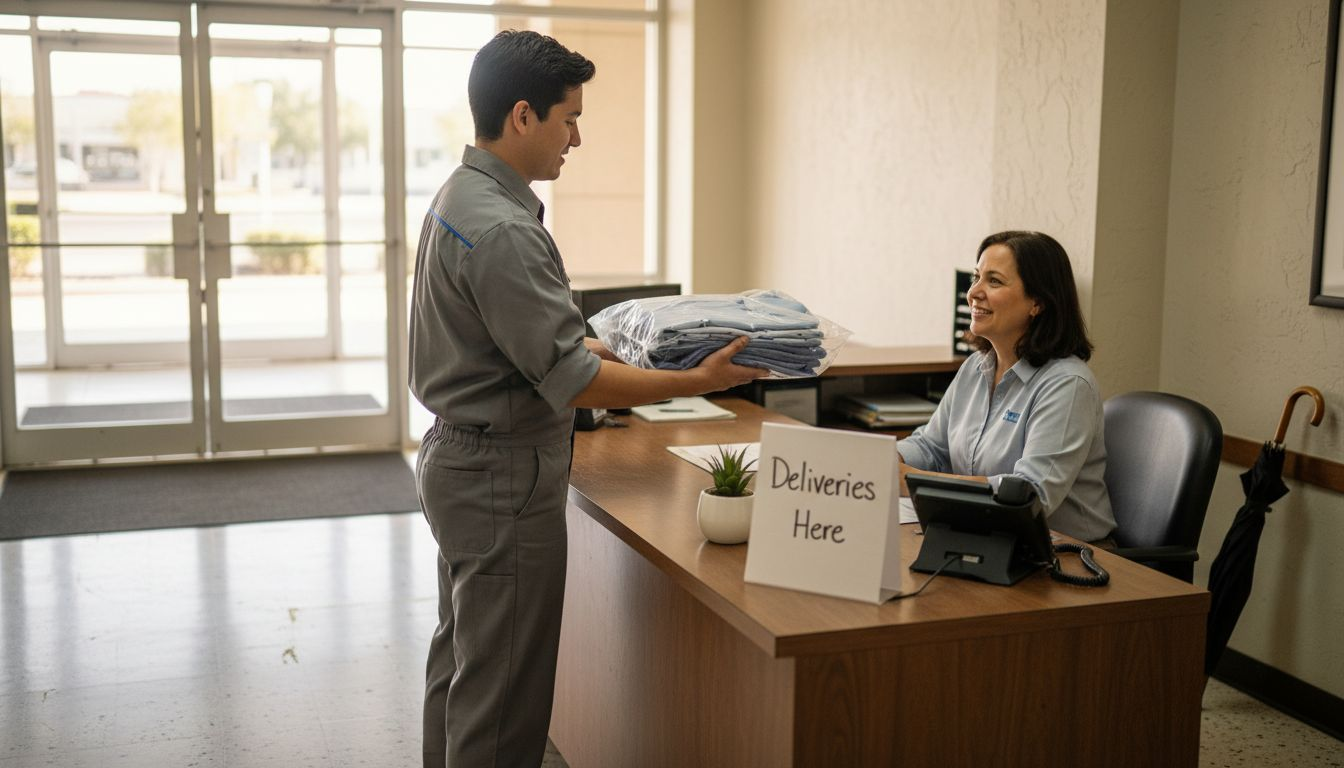
The Coin Laundry Association’s guide to pickup and delivery services offers valuable insights into developing a strategic operational approach. Start by defining clear service parameters such as pickup frequency, turnaround times, and specific handling requirements for different textile types. Consider establishing consistent weekly or biweekly schedules that align with your office workflow, minimizing potential workplace interruptions.
Arrow Machinery recommends carefully mapping out service areas and setting transparent customer expectations. This involves creating detailed communication protocols that specify exact pickup and drop-off times, specific textile care instructions, and potential contingency plans for unexpected circumstances. Develop a standardized tracking system to monitor each textile batch throughout the cleaning process, ensuring accountability and providing peace of mind for your team.
Pro Tip: Implement a digital tracking system that allows real-time updates on laundry status, enabling your team to quickly check pickup, cleaning, and return schedules without manual follow-up.
Step 3: Set Cleaning Preferences and Special Instructions
Establishing clear and detailed cleaning preferences is essential for maintaining the quality and longevity of your office textiles. A comprehensive set of instructions ensures that each item receives the precise care it requires.
Begin by creating a detailed inventory of your office textiles, categorizing them by fabric type, usage frequency, and specific cleaning needs. Business laundry care strategies recommend developing a systematic approach that accounts for unique textile requirements. This might include specifying temperature settings, detergent types, drying methods, and any special handling instructions for delicate or high-value items.

Consider developing a standardized communication form or digital template that allows you to clearly document individual textile requirements. This should include sections for fabric composition, color preservation instructions, stain treatment preferences, and any specific folding or packaging instructions. Ensure that your laundry service provider has a clear understanding of these requirements to prevent potential damage or mishandling.
Pro Tip: Create a color-coded or numbered tagging system for different textile care categories, making it easier for your laundry team to quickly identify and apply the correct cleaning protocol for each item.
Step 4: Streamline Order Tracking and Communication
Effective order tracking and communication are the backbone of a smooth office laundry management system. Creating a transparent and efficient process helps minimize confusion and ensures your textiles are handled precisely as you expect.
Laundry management software solutions can dramatically improve your operational efficiency by automating critical tracking and communication functions. Implement a digital system that provides real-time updates on order status, allowing you to monitor each stage of the cleaning process from pickup to delivery. This technology enables you to track individual textile batches, set custom notifications, and maintain a comprehensive digital record of your laundry service interactions.
The Coin Laundry Association emphasizes the critical nature of clear communication channels. Develop a standardized communication protocol that includes multiple touchpoints such as email updates, SMS notifications, and an online portal where you can review order history, specify special instructions, and quickly resolve any potential issues. Ensure your chosen system allows for easy modification of preferences and provides instant confirmation of each transaction.
Pro Tip: Select a laundry management platform that offers mobile app integration, enabling you to track and manage your office laundry orders directly from your smartphone with just a few taps.
Use this comparison to select an order tracking method for your office laundry:
| Method | Efficiency | Real-Time Updates | Ease of Access |
|---|---|---|---|
| Manual Spreadsheet | Moderate | No | Limited to desktop |
| Email/Phone Log | Low | No | Can be inconsistent |
| Dedicated Software | High | Yes | Computer & mobile app |
| App Integration | Very High | Yes | Instant smartphone access |
Step 5: Verify Cleanliness and Organize Clean Items
The final stage of office laundry management requires a meticulous approach to quality control and organization. Ensuring each textile meets your exact standards while creating an efficient storage system will maximize the value of your professional cleaning service.
Initiate a comprehensive inspection process by carefully examining each returned item for cleanliness, fabric integrity, and proper treatment. 7 essential office laundry tips recommend developing a systematic verification protocol that includes checking for stain removal, color preservation, and overall fabric condition. Look for any residual dirt, persistent odors, or potential damage that might have occurred during the cleaning process.
Develop a structured organization system that categorizes clean textiles by type, usage frequency, and department. Consider implementing color coded hangers, labeled storage containers, or digital tracking methods that allow quick identification and retrieval. This approach not only streamlines your inventory management but also ensures that each textile is readily available when needed, reducing potential workplace disruptions.
Pro Tip: Create a quick visual inspection checklist that your team can rapidly complete, allowing for fast and consistent quality verification of cleaned office textiles.
Simplify Your Office Laundry Management with Trusted Local Expertise
Managing office laundry requires detailed planning around pickup routines, cleaning preferences, and order tracking as outlined in the article. If you face challenges like coordinating multiple textile types, ensuring timely pickups and deliveries, or maintaining clear communication about special instructions, you are not alone. Columbia Pike Laundry understands the pain points of office laundry management and offers practical solutions designed to save you time and reduce stress.
Experience the benefits of a family-owned service that cleans all garments in-house with full control over quality and accountability. Leverage our Commercial Solutions | Laundry Tips to customize your cleaning preferences and streamline your pickup and delivery scheduling through our easy online platform. We also provide dry cleaning services for delicate items, detailed in Dry Cleaning | Laundry Tips, ensuring every office textile is treated carefully to maintain longevity.
Ready to reclaim your valuable time and remove the inconvenience of office laundry? Explore how our proven approach can fit your needs by visiting Columbia Pike Laundry today. Schedule your first pickup or drop-off and start experiencing seamless office laundry management now.
Frequently Asked Questions
How do I assess my office laundry needs effectively?
To assess your office laundry needs, start by conducting an inventory of your laundry volume and types of textiles requiring cleaning. Create a detailed spreadsheet to track factors like wash frequency, fabric types, and soiling levels.
What should I include in my pickup and delivery routine for office laundry?
Your pickup and delivery routine should clearly define service parameters such as pickup frequency and turnaround times. Map out your service areas and create communication protocols that specify pickup and drop-off times to minimize workplace interruptions.
How can I establish cleaning preferences for different textiles?
To establish cleaning preferences, create a detailed inventory of your office textiles categorized by fabric type and specific cleaning needs. Use a digital template to document instructions on temperature settings, detergent types, and treatment for delicate items.
What are the best practices for tracking laundry orders?
Implement a digital order tracking system that provides real-time updates on the status of your laundry. Use this system to monitor each textile batch from pickup to delivery, enhancing transparency and communication within your team.
How can I ensure the cleanliness and organization of returned items?
To verify cleanliness, inspect each returned item for stains and overall fabric condition. Organize clean textiles by categorizing them based on type and usage frequency, using color-coded hangers or labeled storage to streamline access.
What steps can I take to enhance workflow in my office laundry area?
Enhance workflow by ensuring at least 42 inches of clearance in front of washers and dryers for easy access. Create an ergonomic layout and establish a systematic cleaning process to minimize disruptions and improve efficiency.
Recommended
Free pickup, expert care, delivered back to your door.
Popular Blog Articles



Meet the Author
Daniel Logan didn’t start CPL because he loved laundry. He started it because his family was drowning in time debt, and laundry was one of the biggest weights.
Mornings were chaos with two kids under 5. Evenings felt like catch-up. And weekends? Gone to sorting socks and folding piles.
He knew his story wasn’t unique. So he built a business that gave families like his just a little bit of breathing room one load at a time.
With no laundry experience but deep tech skills, Daniel rolled up his sleeves, doing every job himself while building systems that turned it into a modern laundry service that saves customers time, simplifies their lives, and delivers reliability they can count on.
That’s where CPL began. Not from a playbook, but from pain. From one dad trying to buy back time: for himself, and for every household like his.
Free pickup, expert care, delivered back to your door.