
Dry Wash Explained: How Arlington Pros Save Time

Columbia Pike Laundry offers pickup & delivery across Northern Virginia.
TL;DR:
- Dry wash and dry cleaning are identical, using chemical solvents instead of water to clean garments.
- Certain fabrics like wool, silk, and leather require dry wash to prevent shrinkage, damage, or color fading.
- Arlington dry wash services offer eco-friendly options, with convenience features like pickup, delivery, and quick turnaround.
If you’ve ever tossed a silk blouse in the washing machine and watched it come out two sizes smaller, you already know that garment care is not one-size-fits-all. For busy professionals and families in Arlington, Virginia, the term “dry wash” gets thrown around constantly, yet most people aren’t sure what it actually means or when to use it. Is it the same as dry cleaning? Is it just a marketing phrase? Getting this wrong can cost you a favorite suit or a dress you’ve worn to every important occasion. This guide breaks down exactly what dry wash means, how the process works, and how Arlington residents can use it to protect their wardrobes and reclaim their time.
Key Takeaways
| Point | Details |
|---|---|
| Dry wash means dry cleaning | Dry wash and dry cleaning both use chemical solvents rather than water to gently clean clothes. |
| Best for delicate fabrics | Items like wool coats, suits, and silk blouses last longer and look better with regular dry wash. |
| Save time with pickup services | Professionals and families in Arlington can save 3-5 hours a week using local dry wash pickup and delivery. |
| Eco options are available | Many Arlington providers now offer environmentally friendly dry wash solutions. |
What is dry wash? Clearing up the confusion
Let’s settle this once and for all. “Dry wash” and “dry cleaning” both mean cleaning clothes with chemical solvents instead of water. The two terms are interchangeable. If a dry cleaner advertises “dry wash,” they’re offering the exact same service as dry cleaning. The word “dry” simply refers to the absence of water in the primary cleaning process.
Regular home washing is water-based. You add detergent, water does the heavy lifting, and heat from the dryer finishes the job. This works well for cotton t-shirts, denim, and most everyday fabrics. But water is also aggressive. It causes fibers to swell, colors to bleed, and structured garments to lose their shape. That’s why your wool sweater shrinks and your suit jacket loses its crisp silhouette after a home wash.
Dry wash uses chemical solvents, most commonly perchloroethylene (PERC) or newer, greener alternatives, to dissolve oils, grease, and embedded dirt without introducing water to the fabric. The result is a clean garment that keeps its shape, color, and texture. For your dry wash vs dry clean guide, the short answer is: they’re the same thing.
So why does the confusion persist? Partly because the term “dry wash” sounds like it could mean a waterless spray-on product you use at home, which is a completely different product. Those home dry wash sprays are fine for light refreshing between wears but are not a substitute for professional solvent cleaning.
Garments that benefit most from dry wash include:
- Wool coats and blazers that will shrink or felt in water
- Silk blouses and dresses prone to water spotting and color loss
- Structured suits that rely on internal construction staying intact
- Cashmere sweaters that can pill and distort with agitation
- Embellished or beaded garments where water loosens adhesives
- Leather and suede pieces that water can permanently stain
“Dry cleaning is not just for fancy clothes. It’s the right tool for any fabric that water would damage, and knowing which is which is the first step to a wardrobe that lasts.”
The distinction matters for your budget too. Replacing a ruined wool coat costs far more than a single dry wash visit. Treating your wardrobe investment with the right care method is simply smart money management.
Inside the dry wash process: What really happens to your clothes
Most people hand over a garment and pick it up clean without thinking about what happened in between. Understanding the process helps you trust it and communicate better with your provider.
Inspection, stain pretreatment, machine cleaning with solvents, and finishing are all part of the professional dry cleaning process. Here’s how each step works:
- Tagging and logging. Every garment receives a unique tag so it stays matched to your order throughout the process. Nothing gets mixed up.
- Inspection. A trained technician examines each item for existing damage, loose buttons, or fragile areas that need extra care.
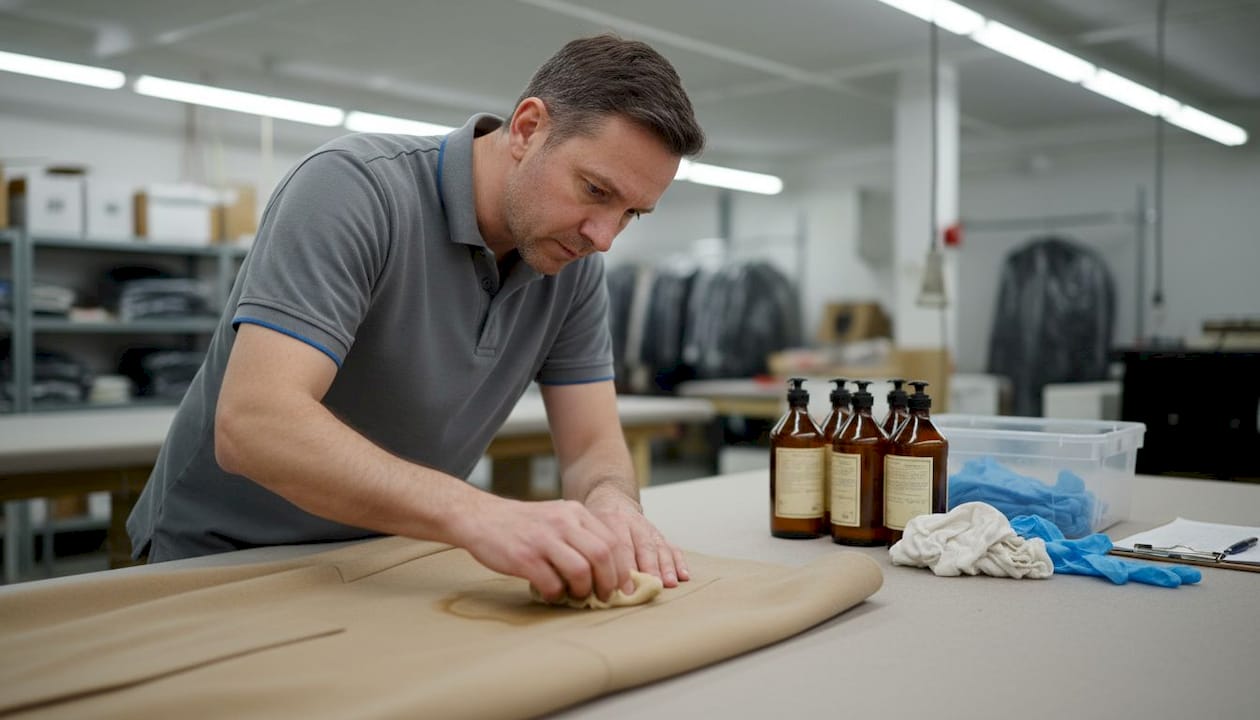
- Stain pretreatment. Problem spots get treated before the main clean. Different stain removal techniques are applied depending on whether the stain is oil-based, protein-based, or tannin-based.
- Solvent cleaning. Garments go into a large drum machine, similar in appearance to a home washer but filled with solvent instead of water. The solvent circulates, lifts oils and dirt, and is then filtered and recycled.
- Drying. Warm air removes residual solvent from the fabric. The garment comes out clean and essentially dry.
- Finishing. Steam pressing, reshaping, and hand finishing restore the garment to its original form. This is the step that makes a suit look like it just came off the rack.
The stain treatment process is where solvents earn their reputation. Because solvents are non-polar, they dissolve oil-based substances like cooking grease, body oils, and makeup far more effectively than water-based detergents.
| Factor | Dry wash | Home washing |
|---|---|---|
| Time (your effort) | Drop off and done | 1.5-2 hrs active time |
| Cost per item | $10-25 per garment | $0.50-1.50 per load |
| Shrinkage risk | Very low | Moderate to high |
| Color preservation | Excellent | Variable |
| Stain removal (oil) | Excellent | Fair |
| Shape retention | Excellent | Poor for structured items |
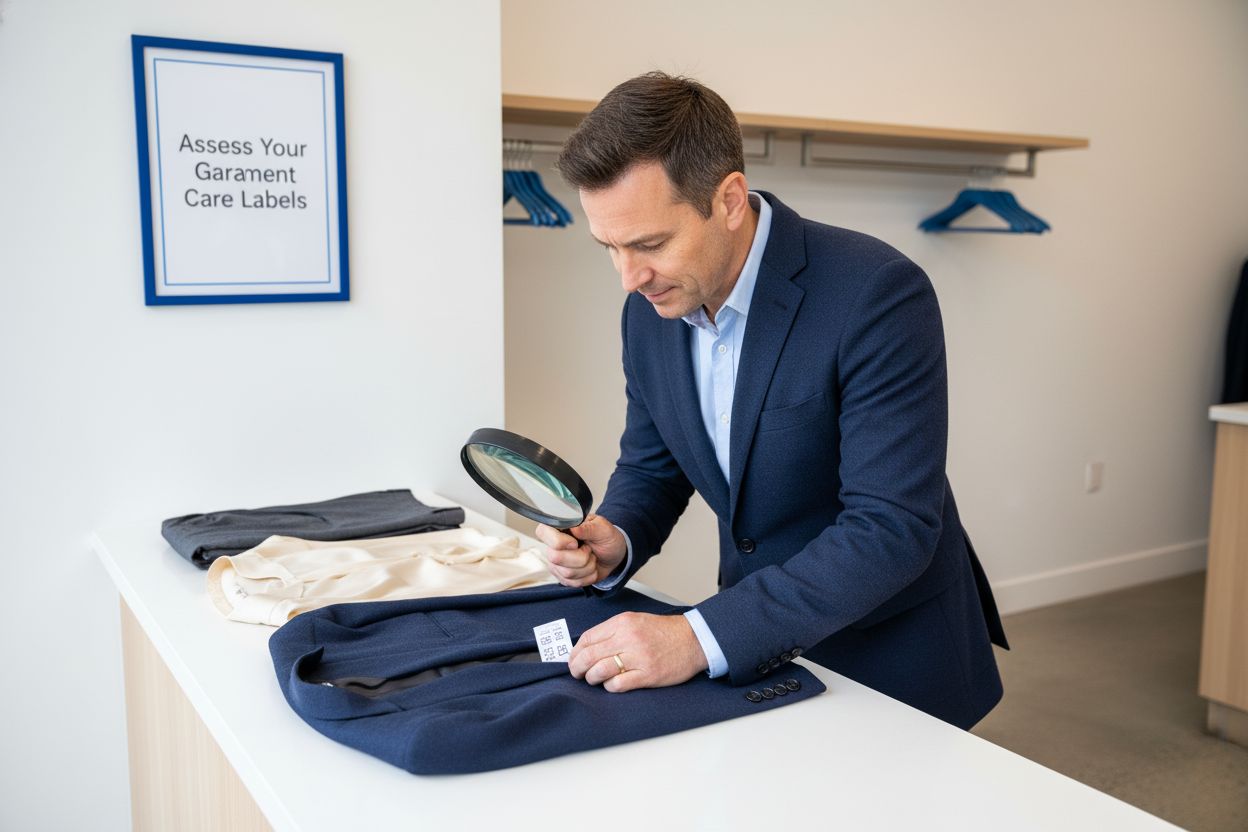
Pro Tip: Before dropping off any garment, check the care label. A symbol that looks like a circle means dry clean only. A circle with an X means do not dry clean. Ignoring these labels is the single most common cause of ruined clothes.
When should you choose dry wash over regular laundry?
Knowing what dry wash is doesn’t automatically tell you when to use it. Here’s a practical framework for making that call quickly.
Certain items should always be dry cleaned because water causes irreversible damage: wool, silk, suits, cashmere, leather, and structured garments are all at risk of shrinkage and color loss in a standard wash.
Garments that require dry wash:
- Tailored suits and blazers (the internal canvas and padding will warp)
- Wool overcoats and trousers (felting and shrinkage are irreversible)
- Silk and satin blouses or dresses (water spots and color bleeding)
- Cashmere and fine knits (agitation causes pilling and stretching)
- Formal gowns and tuxedos (construction and embellishment integrity)
- Leather jackets and suede items (water staining and warping)
For fabrics that need dry cleaning, the rule of thumb is simple: if the fabric is natural and fine, or if the garment has structure, dry wash is the safer choice.
| Fabric | Dry wash recommended | Home wash safe |
|---|---|---|
| Wool | Yes | No |
| Silk | Yes | Rarely |
| Cotton (plain) | No | Yes |
| Polyester | No | Yes |
| Cashmere | Yes | No |
| Linen | Sometimes | Usually |
| Denim | No | Yes |
| Leather/suede | Yes | Never |
Items that are perfectly safe for home washing include cotton t-shirts, most polyester blends, denim, and standard bed linens. The goal isn’t to dry wash everything. It’s to use the right method for each item.

Pro Tip: For high-use work clothing like your go-to blazer or dress pants, schedule professional dry wash every 4-6 wears rather than waiting for visible stains. Regular care extends garment life significantly and keeps your professional appearance sharp.
Dry wash services in Arlington: What to expect, prices, and eco options
Arlington has solid options for dry wash, but not all services are equal. Knowing what to look for saves you time and potential disappointment.
Arlington services offer $2.50 to $2.99 per pound for wash and dry fold, with dry clean pickup, 24 to 48 hour turnaround, free delivery, and eco-friendly options available. For individual dry cleaned garments like suits or dresses, pricing is typically per piece rather than per pound.
Key features to look for in an Arlington dry wash provider:
- In-house cleaning (not outsourced to a third party, which reduces accountability)
- Eco-friendly solvents instead of traditional PERC, which the EPA has been phasing out due to health and environmental concerns
- Pickup and delivery to eliminate the trip entirely
- Online scheduling and order tracking so you always know where your clothes are
- Customizable preferences like fragrance-free detergents or specific folding instructions
One of the most underrated benefits of using a laundry delivery service is the time you get back. Busy Arlington families can save 3 to 5 hours a week by outsourcing laundry and dry wash pickup instead of managing it themselves. That’s time better spent on work, family, or simply resting.
Eco-friendly dry wash is worth asking about specifically. Traditional PERC-based cleaning is effective but carries environmental and health concerns. Newer hydrocarbon and silicone-based solvents are gentler on fabrics, safer for staff, and better for the environment. If sustainability matters to your household, ask your provider directly what solvent they use.
For parents managing school uniforms, sports gear, and formal wear all at once, pickup laundry options and pickup service for parents can genuinely change your weekly routine. Scheduling a regular pickup means laundry stops being a decision you have to make every week.
Why most people get dry wash wrong—and how Arlington families can get it right
Here’s the uncomfortable truth: most wardrobe mistakes aren’t accidents. They’re the result of habit. People wash everything the same way because it’s faster in the moment, and they don’t find out it was wrong until a favorite garment is ruined.
The second mistake is going for the cheapest service without asking how they clean. A dry cleaner that outsources your clothes to a third party loses the quality control that makes professional cleaning worth it. You’re paying for expertise and accountability, not just a pickup truck.
The smartest move for Arlington families and professionals is to invest in eco-friendly pickup dry wash with a provider who cleans in-house. You get better garment outcomes, you’re not contributing to PERC pollution, and you eliminate the time cost entirely. Understanding how pros remove stains also helps you communicate better when you drop something off, which leads to better results.
Don’t let laundry become a source of low-grade stress. The mental load of managing it yourself, making decisions about what goes where, worrying about ruined clothes, adds up. Delegating it to a trusted local provider is one of the highest-leverage time decisions a busy Arlington household can make.
How to make dry wash effortless in Arlington
At Columbia Pike Laundry, we handle dry wash, wash and fold, and repairs entirely in-house at our Arlington storefront on 2602 Columbia Pike. That means tighter quality control and real accountability on every order. How it works is straightforward: schedule a pickup online or through our app, a driver collects your items, we clean them professionally, and return them within 24 to 48 hours, folded, pressed, and ready to wear. We offer eco-friendly solvent options, free delivery, and customizable preferences like fragrance-free detergents. If you’re ready to stop managing laundry and start reclaiming your week, Columbia Pike Laundry is your local, trusted solution.
Frequently asked questions
Is dry wash the same as dry cleaning?
Yes. “Dry wash” is synonymous with “dry cleaning” because both use chemical solvents, not water, to clean garments. The terms are fully interchangeable.
How much does dry wash cost in Arlington, VA?
Arlington dry wash pickup services typically range from $2.50 to $2.99 per pound for wash and fold, with many providers offering free delivery on orders above a minimum threshold.
Does dry wash remove all stains?
Dry cleaning excels on oil-based stains like grease and makeup, but water-based stains such as sweat or juice may require additional spot treatment before or after the solvent process.
Is dry wash safe for all clothes?
Dry wash is ideal for wool, silk, suits, cashmere, and leather, but always read your garment’s care label first since some items are labeled “do not dry clean.”
Are there eco-friendly dry wash options in Arlington?
Yes. Many Arlington providers, including Columbia Pike Laundry, offer eco-friendly solvent options that replace traditional PERC with safer hydrocarbon or silicone-based alternatives.
Recommended
Free pickup, expert care, delivered back to your door.
Popular Blog Articles



Meet the Author
Daniel Logan didn’t start CPL because he loved laundry. He started it because his family was drowning in time debt, and laundry was one of the biggest weights.
Mornings were chaos with two kids under 5. Evenings felt like catch-up. And weekends? Gone to sorting socks and folding piles.
He knew his story wasn’t unique. So he built a business that gave families like his just a little bit of breathing room one load at a time.
With no laundry experience but deep tech skills, Daniel rolled up his sleeves, doing every job himself while building systems that turned it into a modern laundry service that saves customers time, simplifies their lives, and delivers reliability they can count on.
That’s where CPL began. Not from a playbook, but from pain. From one dad trying to buy back time: for himself, and for every household like his.
Free pickup, expert care, delivered back to your door.