
Top Energy-Saving Laundry Tips for Arlington Families
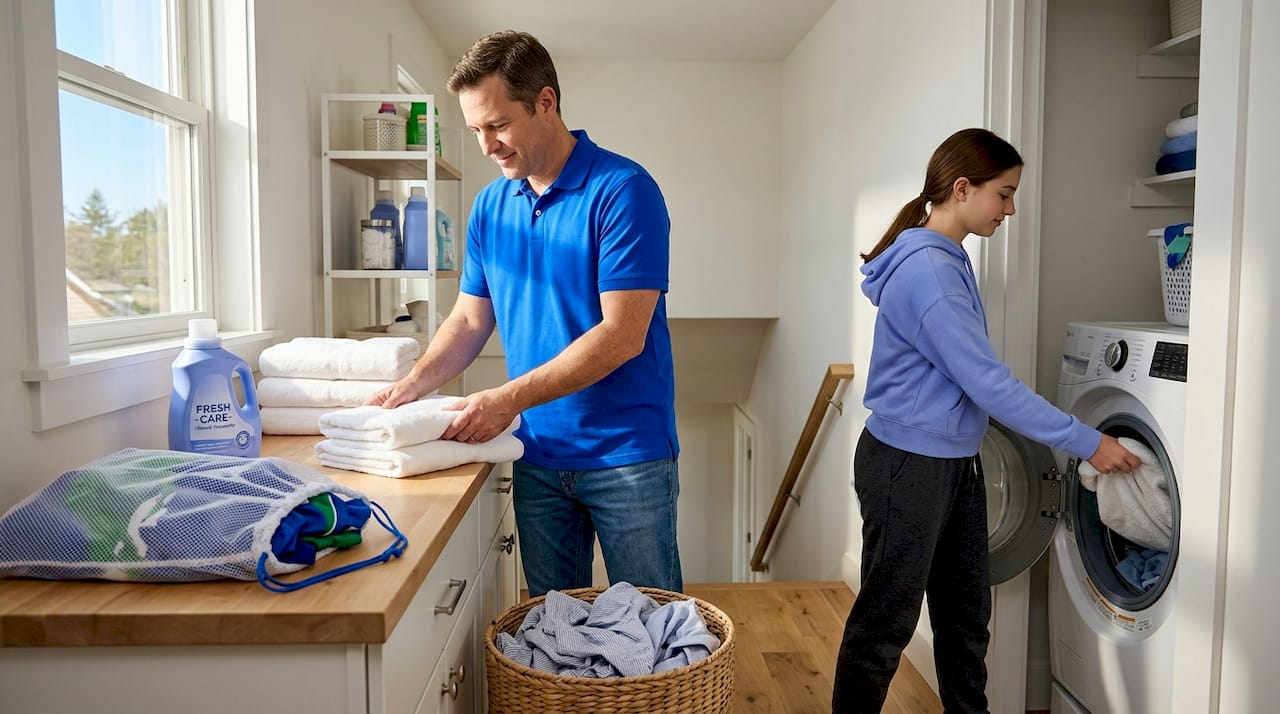
Columbia Pike Laundry offers pickup & delivery across Northern Virginia.
TL;DR:
- Washing in cold water can reduce energy use by up to 90%.
- Using high-efficiency appliances and smart habits boosts laundry energy savings significantly.
- Proper load sizing, sorting, air drying, and routine maintenance are key for sustainable, cost-effective laundry.
Laundry might feel like background noise in a busy Arlington household, but it quietly drives up your utility bills every single week. Washing in cold water alone can cut your washer’s energy use by up to 90%, because heating water accounts for nearly all the energy your machine consumes. For families juggling work, school, and weekend activities along Columbia Pike, small laundry changes add up to real savings on your Dominion Energy bill and a measurably lighter footprint on the environment. This article walks you through four evidence-backed strategies you can start using immediately, no new appliances required for most of them.
Key Takeaways
| Point | Details |
|---|---|
| Use cold water wash | Switching to cold water for most loads cuts washer energy use by up to 90%. |
| Upgrade appliances wisely | ENERGY STAR and heat pump models dramatically cut energy costs and water use over time. |
| Sort and load efficiently | Batching full loads, separating fabrics, and using high-spin cycles reduce both wash and dry energy. |
| Air dry when possible | Air drying saves all dryer-related power, making it the most effective zero-cost tip. |
| Maintain for savings | Clean lint filters and use auto-dry settings to speed drying and prevent excess energy waste. |
Wash in cold water to cut energy usage
The single fastest way to shrink your laundry energy bill costs almost nothing: turn the dial to cold. Water heating is 90% of the energy your washing machine uses, which means the wash cycle itself is nearly free by comparison. Switching to cold water for everyday loads is the highest-impact change any Arlington household can make before touching anything else.
The good news is that modern detergents are engineered specifically for cold water performance. Brands formulated for cold cleaning dissolve quickly and activate their stain-fighting enzymes at lower temperatures, so your clothes come out just as fresh as they would on a warm cycle. The only loads that genuinely benefit from warmer water are heavily soiled items with oily stains, cloth diapers, and bedding when someone in the house has been sick. For the other 80 to 90 percent of what your family washes, cold is absolutely the right call.
Here is a quick breakdown of when each temperature setting makes sense:
- Cold (60-80°F): Everyday clothing, lightly worn items, colors prone to fading, synthetics, and delicates
- Warm (90-110°F): Moderately soiled cotton, permanent press fabrics, and mixed loads
- Hot (120°F+): Heavily soiled work clothes, cloth diapers, and sanitizing loads after illness
“Washing in warm water instead of cold uses about five times more energy. That difference shows up on your bill every month, not just once a year.” — U.S. Department of Energy
For a smooth transition to cold-water washing, build an efficient home laundry routine around pre-treating tough stains before they ever enter the machine. A small dab of liquid detergent or a stain-specific pre-treatment product applied 10 to 15 minutes before washing handles what cold water alone might miss. Check your detergent label too. Some plant-based or concentrated formulas explicitly list a minimum temperature, and using them outside that range can leave residue on fabrics.
Pro Tip: If you are not sure which detergent works best in cold water, look for labels that say “cold water formula” or “works in all temperatures.” These are optimized to dissolve at lower temps and will give you the best results without any compromise on cleanliness.
Choose high-efficiency appliances
After optimizing your cycle settings, the next lever to pull is the equipment itself. If your washer or dryer is more than 10 years old, it is almost certainly costing you more to run than a modern replacement would. ENERGY STAR-certified washers use 25% less energy and 35% less water than standard models, while certified dryers cut energy use by 20% compared to conventional machines.
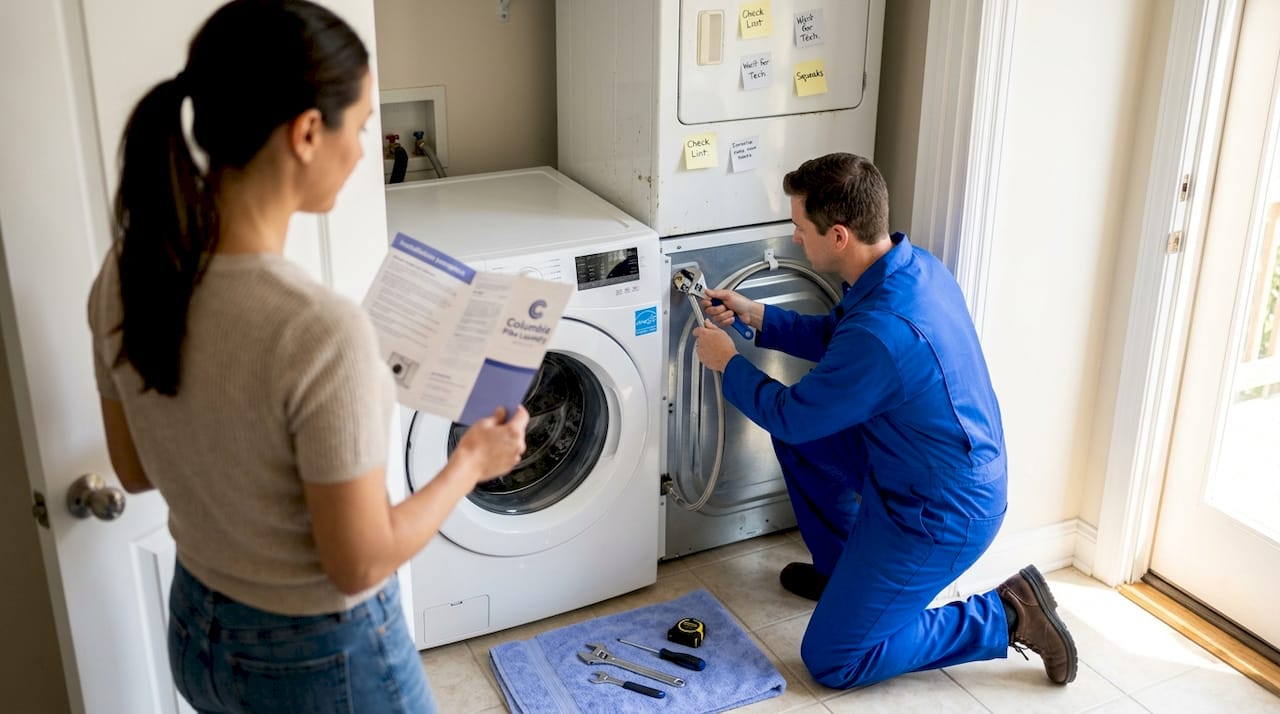
The most impressive upgrade on the market right now is the heat pump dryer. Instead of burning electric coils to generate heat, a heat pump dryer recirculates warm air in a closed loop, requiring far less electricity to maintain drying temperature. Heat pump dryers save between 20 and 60% more energy than conventional dryers, and because they do not require an exterior vent, they are a practical option for Arlington condos and townhomes where vent installation is complicated or impossible.
Here is how the three appliance tiers compare at a glance:
| Feature | Standard | ENERGY STAR | Heat pump dryer |
|---|---|---|---|
| Energy savings vs. standard | Baseline | Up to 25% (washer), 20% (dryer) | 20-60% (dryer) |
| Water savings | Baseline | Up to 35% (washer) | Minimal difference |
| Venting required | Yes (dryer) | Yes (dryer) | No |
| Typical upfront cost | Lowest | Moderate | Higher |
| Best for | Budget shoppers | Most households | High-volume or condo living |
Beyond the monthly savings, check whether you qualify for federal or state rebates before purchasing. The Inflation Reduction Act extended appliance efficiency rebates for qualifying households, and Virginia utilities sometimes run their own incentive programs. The energy efficient appliances benefits extend well beyond the purchase price when you factor in lower utility bills over a machine’s lifespan of 10 to 13 years.
Here are the most important features to look for when shopping:
- High spin speed (1,000+ RPM): Removes more water before drying, cutting dryer time significantly
- Moisture sensors: Prevent over-drying and save electricity automatically
- Delay start timer: Lets you schedule loads during off-peak hours without being present
- Large-capacity drum: Fewer total loads per week for the same amount of laundry
- Low water factor rating: Signals top efficiency for front-loaders and high-efficiency top-loaders
If you want to see how eco laundry services handle high-volume washing with efficiency in mind, it is worth looking at what professional operations prioritize. Commercial-grade equipment uses advanced moisture sensors and load optimization that consumer machines are only beginning to match.
Master load size and sorting for efficiency
Even the most advanced washer and dryer underperform when you load them incorrectly. Load size and sorting habits are among the most underestimated tools for cutting laundry energy costs, and they require zero investment to change today.
The fundamental rule is straightforward: use full loads but not overcrowded ones. An underfilled washer uses almost as much water and energy as a full one, which means washing two half loads costs you twice what one full load would. At the same time, stuffing the drum too tightly prevents clothes from moving freely through the water, which leads to uneven cleaning and often a second wash cycle. Aim for about three-quarters full as your default.
The spin cycle matters more than most people realize. A high-speed spin (look for 1,000 to 1,200 RPM on ENERGY STAR models) extracts significantly more moisture from fabrics before they go into the dryer. That mechanical extraction uses far less energy than thermal drying, so every extra minute in a high-spin cycle translates directly to fewer minutes of dryer energy consumption.
Sorting strategically for efficient drying is another major win. Separate heavy items like towels and jeans from lightweight items like T-shirts and underwear. When you mix fabric weights in the dryer, the machine must run long enough to dry the heaviest pieces, which means the lighter pieces get over-dried and stressed unnecessarily. Sorting by weight creates loads that finish at nearly the same time, reducing total dryer runtime and extending the life of your clothes.
Here is a practical workflow for a high-efficiency laundry day:
- Sort laundry into three piles: lights/delicates, everyday darks/colors, and heavy fabrics (towels, denim, sweatshirts)
- Check that each load is close to three-quarters full before starting
- Select the highest spin speed compatible with the fabric type
- Move heavy items to a separate dryer load from lighter fabrics
- Set a timer or use your washer’s delay start to batch loads back-to-back without reheating
| Load type | Recommended spin speed | Average drying time saved |
|---|---|---|
| Delicates (lingerie, silk) | Low (400-600 RPM) | Minimal (air dry preferred) |
| Everyday mixed cotton | Medium (800-1,000 RPM) | 10-15 minutes |
| Towels and denim | High (1,000-1,200 RPM) | 15-25 minutes |
Understanding sorting laundry basics goes beyond just colors versus whites. Fabric weight, care label instructions, and even lint production (terry cloth sheds onto dark synthetics) all factor in. For families managing multiple people’s wardrobes, a laundry organization system with labeled hampers for each category makes consistent sorting effortless rather than a chore to think through every time.
Pro Tip: Batch your laundry days to run consecutive loads. The dryer drum retains heat between loads, so your second and third loads start warm and take less energy and time to finish. Running one load in the morning and one at night wastes that retained heat entirely.
Air drying and smart dryer use
The dryer is the single most energy-hungry appliance in most laundry rooms, and it is also the one where a handful of simple habits can compound into serious annual savings. The highest-impact step is the most obvious: air drying saves 100% of dryer energy for every item that goes on a rack instead of in the machine.
You do not need to give up your dryer entirely to see big savings. Even air drying one or two loads per week, particularly items like athletic wear, delicates, and dress shirts, cuts your dryer runtime meaningfully. Delicates and synthetics often last longer when air dried too, since tumble heat breaks down elastic fibers and causes pilling over time. Check out these tips for hanging laundry to dry and practical methods for how to air dry clothes indoors during Arlington’s wetter months.
When you do use your dryer, these habits keep it running as efficiently as possible:
- Clean the lint filter after every single load. A clogged lint trap restricts airflow, forces the dryer to run longer, and creates a genuine fire hazard. It takes about 10 seconds and is non-negotiable.
- Use the moisture sensor or auto-dry setting instead of a timed cycle. Moisture sensors detect when clothes are actually dry and shut the drum off automatically, preventing the over-drying that wastes energy and wears out fabric.
- Schedule dryer loads during off-peak hours. In Northern Virginia, Dominion Energy’s off-peak windows typically fall in the evenings and overnight. Running your dryer during these hours reduces strain on the grid and may lower your effective rate depending on your plan.
- Keep the exterior dryer vent clear. Lint and debris accumulate in vent ducts over time, reducing efficiency and creating a fire risk. Professional dryer vent maintenance is recommended at least once a year for high-volume households.
“Drying clothes during off-peak hours is one of the easiest ways to reduce grid demand and your bill, but the dryer should never run while you are asleep or away from home.” — Good Housekeeping
Pro Tip: Toss a clean, dry towel into the dryer with a large wet load for the first 15 to 20 minutes, then remove it. The dry towel absorbs moisture from the wet items, cutting total drying time by 10 to 15 minutes without any other changes.
Why real energy savings start with simple habits, not just new tech
Here is an honest perspective from working with Arlington families every week: most people assume energy efficiency requires buying something new. A new washer, a heat pump dryer, a smart home device. The appliance industry is happy to encourage that belief. But the families who actually see the biggest reductions in their laundry energy costs are not always the ones with the newest machines.
They are the ones who stopped running the dryer on timed cycles. They are the ones who started checking that the lint trap is clear before every load. They are the ones who default to cold water for everything except the occasional sanitizing load.
A heat pump dryer is a genuinely great investment if your equipment is aging and your budget allows. We are not dismissing that. But an ENERGY STAR dryer used carelessly, with timed cycles, a dirty lint filter, and mixed-weight loads, will underperform a basic dryer used with all the habits above. The machine does not save energy. Your habits do.
Consistent routines are also what make savings sustainable for busy households. A plan that saves money on laundry does not require willpower every single laundry day. It requires setting the right defaults once: default to cold, default to auto-dry, default to full loads. After two or three weeks, these choices stop feeling like choices at all. They become your normal routine, and the savings compound without any ongoing effort.
The environmental argument is just as practical. Every load run in cold water, every item air dried on a rack, every dryer cycle ended by a moisture sensor instead of a timer represents a real reduction in carbon emissions. For Arlington families who care about the community they live in and pass on to their kids, that is not an abstract benefit. It is something measurable happening in your home every single week.
Save time and energy with Columbia Pike Laundry
If you want to take laundry off your plate entirely while staying aligned with your energy and sustainability goals, Columbia Pike Laundry is built for exactly that. We handle wash and fold, dry cleaning, and bulky items entirely in-house at our 2602 Columbia Pike storefront, which means real quality control and accountability instead of a mystery middleman. Learn how Columbia Pike Laundry works and see how scheduling a pickup through our app takes less than two minutes. For businesses and larger households in the area, our commercial laundry in McLean service extends the same reliable, energy-conscious approach to high-volume needs. We support custom preferences like fragrance-free detergents and precise folding instructions, with a standard 48-hour turnaround and express options when life gets unpredictable.
Frequently asked questions
Does cold water really clean clothes well?
Yes, modern detergents are formulated for cold water and work effectively for most loads, with the exception of heavy oily stains that may need warm water to lift fully.
Is it safe to run my dryer at night in Arlington, VA?
Running your dryer during off-peak evening hours can reduce energy costs, but you should never leave the dryer running while you are asleep or away from home due to fire risk.
How often should I clean my dryer’s lint filter?
You should clean the lint filter after every single load to maintain airflow, improve efficiency, and reduce the risk of a dryer fire.
What are the best fabrics to air dry?
Delicates, athletic wear, and anything with an air-dry care label benefit most from line or rack drying because air drying protects fabrics and eliminates 100% of dryer energy for those items.
Are heat pump dryers worth the investment?
For high-volume households, yes: heat pump dryers save 20-60% more energy than conventional dryers, and the upfront cost typically pays back over a few years of regular use.
Free pickup, expert care, delivered back to your door.
Popular Blog Articles



Meet the Author
Daniel Logan didn’t start CPL because he loved laundry. He started it because his family was drowning in time debt, and laundry was one of the biggest weights.
Mornings were chaos with two kids under 5. Evenings felt like catch-up. And weekends? Gone to sorting socks and folding piles.
He knew his story wasn’t unique. So he built a business that gave families like his just a little bit of breathing room one load at a time.
With no laundry experience but deep tech skills, Daniel rolled up his sleeves, doing every job himself while building systems that turned it into a modern laundry service that saves customers time, simplifies their lives, and delivers reliability they can count on.
That’s where CPL began. Not from a playbook, but from pain. From one dad trying to buy back time: for himself, and for every household like his.
Free pickup, expert care, delivered back to your door.