
Efficient Laundry Stain Removal Workflow for Families

Columbia Pike Laundry offers pickup & delivery across Northern Virginia.
TL;DR:
- Quick action and proper tools are essential for effective household stain removal.
- Follow a step-by-step workflow: act fast, blot, rinse, pretreat, wash, and check before drying.
- For stubborn stains, soak and repeat treatments, especially on set or dried stains.
Breakfast is barely over and someone’s grape juice has already made its way onto a white school shirt. Sound familiar? For busy Arlington families, stain emergencies don’t wait for a convenient moment. They hit right when you’re rushing out the door, wrangling kids, or trying to squeeze one more task into an already packed schedule. The good news is that a reliable, efficient stain removal workflow can turn those frantic moments into a quick, calm fix. This guide gives you the toolkit, the step-by-step process, and the troubleshooting strategies to handle virtually any stain your household throws at you.
Key Takeaways
| Point | Details |
|---|---|
| Act quickly | Blot and pretreat stains immediately to maximize removal success. |
| Enzyme-based products | Enzymatic removers resolve most household stains better than DIY options. |
| Avoid heat | Do not use dryer heat until all stains are gone—it locks them permanently. |
| Routine integration | Fit stain removal steps into your regular laundry schedule for greater efficiency. |
| Presoak stubborn stains | Set or dried stains often need repeated cold water and enzyme treatment before washing. |
Essential toolkit for stain removal
With the goal clear, let’s start by building a toolkit that primes your home for stain emergencies. You don’t need a cabinet full of specialty products. You need the right items, stored where you can grab them fast.
According to Consumer Reports, an essential stain toolkit includes an enzymatic laundry pretreater like OxiClean MaxForce, a dish soap solution (just 1/4 teaspoon of dish soap in one cup of water), hydrogen peroxide, white cloths, and baking soda for grease-based stains. That’s five items. Simple.
Here’s a quick comparison to help you decide between commercial and homemade solutions:
| Solution | Best for | Speed | Cost |
|---|---|---|---|
| Enzymatic pretreater (OxiClean MaxForce) | Protein, food, grass stains | Fast | Moderate |
| Oxygen-based cleaner (OxiClean powder) | General stains, whites | Moderate | Low |
| Dish soap solution | Grease, oil | Fast | Very low |
| Hydrogen peroxide | Blood, wine, mold | Fast | Very low |
| Baking soda paste | Grease absorption | Moderate | Very low |

For day-to-day spills, the best stain removers tested by Good Housekeeping consistently rank enzymatic and oxygen-based formulas at the top. DIY solutions are solid backups, not replacements.
What to keep in your laundry toolkit:
- Enzymatic pretreater spray (OxiClean MaxForce or similar)
- Dish soap solution in a small labeled spray bottle
- 3% hydrogen peroxide
- A stack of white cloths (colored cloths can transfer dye)
- Baking soda in a shaker container
- A soft-bristled brush for working solutions in gently
For families with kids, check out these laundry essentials for parents to round out your setup. And if school uniforms and sports gear are a constant battle, our kids laundry tips offer practical, tested guidance.
Consumer Reports also points out that multi-stain products like OxiClean let you pretreat and toss a garment in the wash at the same time, cutting steps out of your routine. That’s exactly the kind of efficiency busy families need.
Pro Tip: Store your toolkit in a small caddy on top of the washer, not under the sink. The faster you can reach it, the faster you can treat the stain.
Step-by-step laundry stain removal workflow
Once your toolkit is ready, follow this reliable workflow for every type of family stain. The order matters. Skipping steps is where most people go wrong.
The core workflow:
- Act within the first two minutes. Fresh stains are far easier to remove than dried ones.
- Blot, never rub. Rubbing pushes the stain deeper into fabric fibers and spreads it wider.
- Rinse with cold water from the back of the fabric to push the stain out rather than through.
- Test your chosen solution on a hidden seam or inner hem to check for colorfastness.
- Apply your pretreater and let it sit for five to ten minutes.
- Launder on the appropriate cycle per the care label.
- Check before the dryer. If the stain is still visible, repeat the process. Never put a stained item in the dryer.
Consumer Reports confirms this general stain removal workflow as the gold standard: act quickly, blot don’t rub, test first, pretreat with the right solution, and avoid heat until the stain is fully gone.

Here’s how to apply the workflow to the most common family stains:
| Stain type | First step | Best solution | Water temp |
|---|---|---|---|
| Coffee / tea | Blot excess | Dish soap solution | Cold |
| Wine | Blot, rinse back | Hydrogen peroxide | Cold |
| Grease / oil | Blot, apply baking soda | Dish soap solution | Warm |
| Blood | Rinse cold immediately | Enzyme pretreater | Cold only |
| Grass | Brush off debris | Enzymatic spray | Cold |
| Chocolate | Scrape, cold rinse | Enzymatic spray | Cold |
For a deeper breakdown by stain type, our laundry stain removal guide covers over 20 common household stains. Good Housekeeping’s best stain remover advice is also worth bookmarking for reference.
Remember: Heat is the enemy of a stain you haven’t fully removed. One cycle in a hot dryer can permanently bond a stain to the fabric.
You can also download our printable stain guide and stick it inside the laundry room cabinet door for quick reference. Or use the stain removal checklist to walk through the steps without guessing.
Pro Tip: For protein-based stains like blood or dairy, cold water is non-negotiable. Hot water cooks the protein into the fabric, making it nearly impossible to remove later.
Troubleshooting stubborn and set stains
Even with a solid workflow, some stains prove stubborn. Here’s how to handle the trickiest cases.
Set stains, meaning stains that have dried or gone through a dryer cycle, are in a different category. You’re not just lifting a fresh spill. You’re breaking down a bond between the stain compound and the fabric fibers. This takes more time and repetition.
Strategies for set stains:
- Presoak for 30 to 60 minutes in cold water with an enzymatic pretreater before washing.
- Repeat the treatment two or three times if needed. Don’t expect one application to work on a set stain.
- Use an oxygen-based soak for white or light fabrics. Mix OxiClean with warm water and soak for up to six hours.
- Avoid the dryer until you’ve confirmed the stain is fully gone through multiple wash cycles if necessary.
- Test colorfastness first, especially before using hydrogen peroxide or oxygen-based cleaners on colored fabrics.
Good Housekeeping notes that protein stains like blood require cold water and enzyme pretreaters. Hot water sets them permanently. If a blood stain has dried, presoak in cold water for at least 30 minutes before applying enzymes.
Hard truth: Some stains simply won’t come out. Rust, bleach damage, paint, and ink or dye-based stains may be permanent regardless of treatment. Knowing when to stop saves you from damaging fabric with repeated harsh treatments.
Detergent residue can also create its own discoloration problem. If you’ve ever pulled a shirt from the wash with a white streaky patch, check out tips for removing detergent stains and remove detergent stains fast to fix that specific issue.
For a full reference by fabric type and stain category, the ultimate stain removal advice from Consumer Reports is one of the most thorough resources available. Our stain guide for moms also breaks down by real-life scenarios that families encounter most.
Pro Tip: Mark the location of a set stain with a safety pin before washing. If it vanishes, great. If not, you’ll find it quickly instead of hunting through a dry garment.
Integrating stain removal into busy family laundry routines
To truly simplify chores, weave stain removal right into your normal laundry process. The biggest mistake families make is treating stain removal as a separate task. It doesn’t have to be.
Consumer Reports recommends keeping your toolkit ready and using multi-stain products so you can pretreat and add garments directly to the current wash load. That approach eliminates the pile-up of stained items waiting for special attention.
Practical habits for a stain-smart routine:
- Set a laundry station. Keep your toolkit within arm’s reach of the washer so pretreating takes 30 seconds, not a search mission.
- Pretreat at night. If a stain happens during dinner, treat it before bed and wash it in the morning. The pretreater does the work while you sleep.
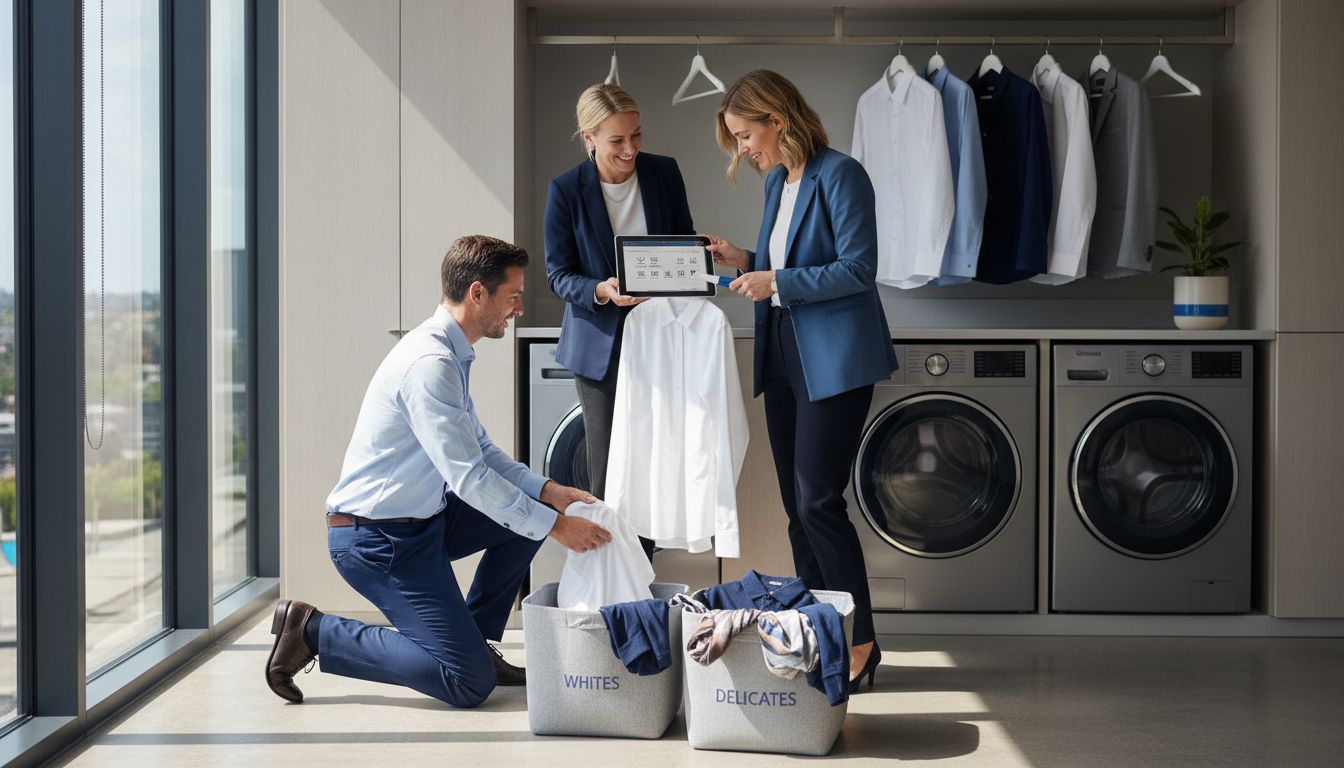
- Use a sorting system. A two-bin sorter with one bin labeled “needs pretreat” catches stained items before they accidentally go in with a regular load untreated. Our separating clothes tips walk you through the sorting setup.
- Batch on weekends. Consolidate stained items from the week and handle them in one focused Saturday session. This works well for sports uniforms, school shirts, and kitchen linens.
- Build in a visual check. Before loading the dryer, run a five-second scan of each item. This one habit alone prevents permanently set stains.
For families in Arlington, organizational laundry tips can help you build a system that works around school schedules, sports seasons, and everything else pulling at your time.
Good Housekeeping also points out that in areas with hard water, mineral buildup can reduce the effectiveness of detergents and stain removers. If Arlington’s water supply is affecting your results, try adding a water softener additive to your wash cycle.
Pro Tip: Write the day’s date on a piece of masking tape and stick it to stained items before pretreating. It helps you track how long an item has been soaking and reminds you to check results before the dryer.
Our take: What really works for Arlington families
Having worked through every practical workflow, here’s what we’ve actually seen make the difference for families in this area.
The biggest myth in laundry is that scrubbing harder removes stains faster. It doesn’t. It damages fabric and spreads the stain. Blotting, patience, and the right chemistry do the real work. Enzyme-based products consistently outperform homemade solutions in real-world tests, not because DIY doesn’t work at all, but because enzymes target specific proteins, starches, and fats in ways that dish soap simply can’t replicate at scale.
Speed is the single biggest factor in whether a stain comes out. In our experience, roughly 90% of fresh stains resolve cleanly when treated within the first few minutes. That number drops significantly once a stain dries or hits dryer heat. The workflow in our laundry stain guide is built around that reality.
National stain removal guidance applies fully here in Arlington. The only local nuance worth knowing is that Northern Virginia’s water can run moderately hard, which means your detergent and stain removers may need a small boost. A tablespoon of white vinegar or a water-softening additive in the wash cycle can make a noticeable difference.
Efficient laundry solutions for Arlington families
If laundry still feels overwhelming, Arlington families can turn to professional support that keeps chores smart and stress-free. Even the best home workflow has limits, especially during busy seasons when stained uniforms, bed linens, and work clothes all pile up at once.
Columbia Pike Laundry offers wash and fold, dry cleaning, and pickup and delivery services right here in Arlington. You can schedule a driver to collect your items, have everything cleaned in-house with your specific preferences, and get it back folded and ready within 48 hours. Learn more about how our laundry service works and see how easily it fits alongside your home stain removal routine. Sometimes the smartest workflow includes knowing when to hand it off.
Frequently asked questions
What’s the best way to remove blood stains from clothing?
Use cold water immediately and apply an enzyme-based pretreater, never hot water, since heat sets blood stains permanently. Repeat the presoak if the stain doesn’t lift after the first wash.
Are commercial stain removers better than homemade solutions?
Yes, enzyme-based commercial removers outperform DIY options for most stains, though dish soap handles grease well in a pinch. Think of homemade solutions as useful backups, not your first line of defense.
How can I prevent stains from setting in laundry?
Always check garments before the dryer, since dryer heat locks stains in permanently, and pretreat as quickly as possible after the spill happens.
Do stain removal workflows change for Arlington, VA families?
National tips apply directly, but if you notice reduced cleaning performance, hard water adjustments like adding a softening agent to your wash may help improve results in the Northern Virginia area.
Free pickup, expert care, delivered back to your door.
Popular Blog Articles


Meet the Author
Daniel Logan didn’t start CPL because he loved laundry. He started it because his family was drowning in time debt, and laundry was one of the biggest weights.
Mornings were chaos with two kids under 5. Evenings felt like catch-up. And weekends? Gone to sorting socks and folding piles.
He knew his story wasn’t unique. So he built a business that gave families like his just a little bit of breathing room one load at a time.
With no laundry experience but deep tech skills, Daniel rolled up his sleeves, doing every job himself while building systems that turned it into a modern laundry service that saves customers time, simplifies their lives, and delivers reliability they can count on.
That’s where CPL began. Not from a playbook, but from pain. From one dad trying to buy back time: for himself, and for every household like his.
Free pickup, expert care, delivered back to your door.